DIAGNOSIS EXPLAINED
Dishwasher problems:
what to check.
Two common situations, the possible causes, and how a repair decision is made.
Illustrative scenarios, not completed customer jobs or testimonials. The exact diagnosis depends on your appliance and an inspection.
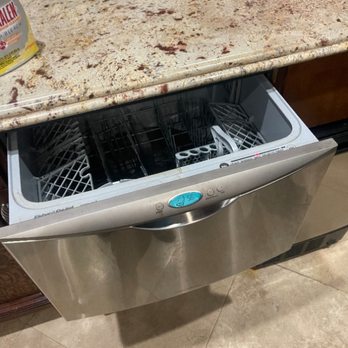
ILLUSTRATIVE EXAMPLE 01
Water remains after a cycle
The complaint: Standing water is visible above the normal sump area after the dishwasher finishes.
What the diagnosis separates: The technician checks the filter, drain routing, pump and connection to the sink or disposal. A recently installed disposal is an important detail to report.
A possible next step: Clearing a confirmed obstruction differs from replacing a failed drain pump. Drain operation and leaks should be checked after work is completed.
ILLUSTRATIVE EXAMPLE 02
Foam escapes the door
The complaint: Excess foam appears after hand-washing liquid or the wrong detergent was used.
What the diagnosis separates: The immediate question is whether oversudsing, a leak or a drain problem is involved. Stop the cycle and follow the model’s instructions; keep electrical connections dry.
A possible next step: Do not add more detergent or an improvised chemical mixture. Follow manufacturer guidance for removing suds. A continuing leak after the suds are gone requires inspection.
What to send Leo.
A model-label photo, the error code if shown, when the issue started, and whether it happens every cycle. Do not remove electrical covers or dismantle the appliance to collect this information.
Dishwasher repair: service details →TALK DIRECTLY WITH LEO
Start with the symptoms.
Send the appliance type, model number, symptoms and ZIP code. Leo will confirm coverage, availability and the next step. Requests daily, 8 AM–10 PM Eastern; visits by appointment.